



Live on CCTV | First from Foshan! NPC Deputy Li Changdong of Brunp Recycling Takes the "Deputies' Passage"
-

Release time:2026-03-09
-

Author:Brunp Recycling
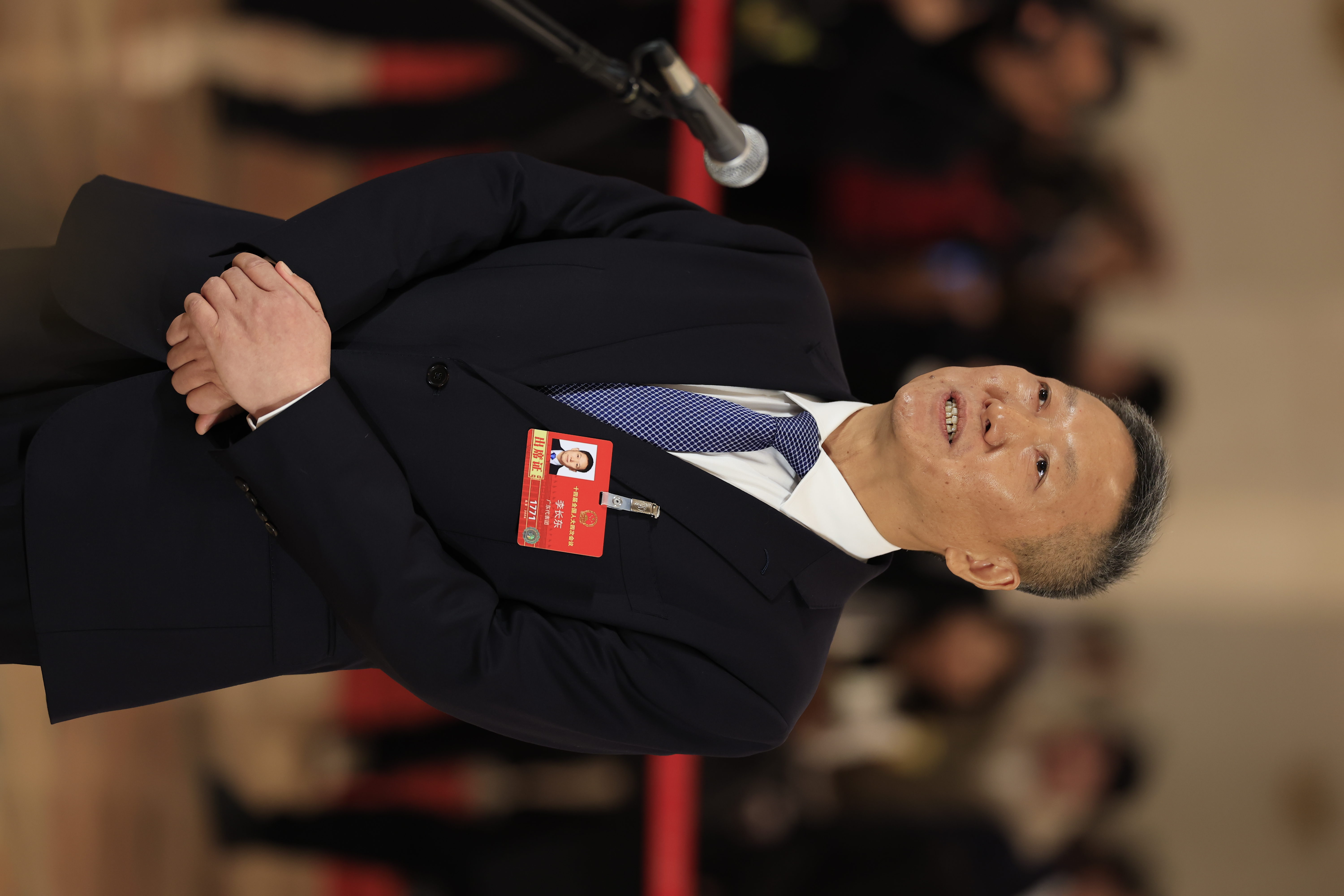
The second "NPC Deputies' Passage" of the Fourth Session of the 14th National People's Congress opened. Li Changdong, NPC Deputy and Chairman & President of Guangdong Brunp Recycling Technology Co., Ltd., took the passage to answer questions from the media outlets, with the entire event broadcast live by CCTV(China Central Television). This marks a historic moment — the first deputy from Foshan to appear at the "NPC Deputies' Passage" during the National Two Sessions.
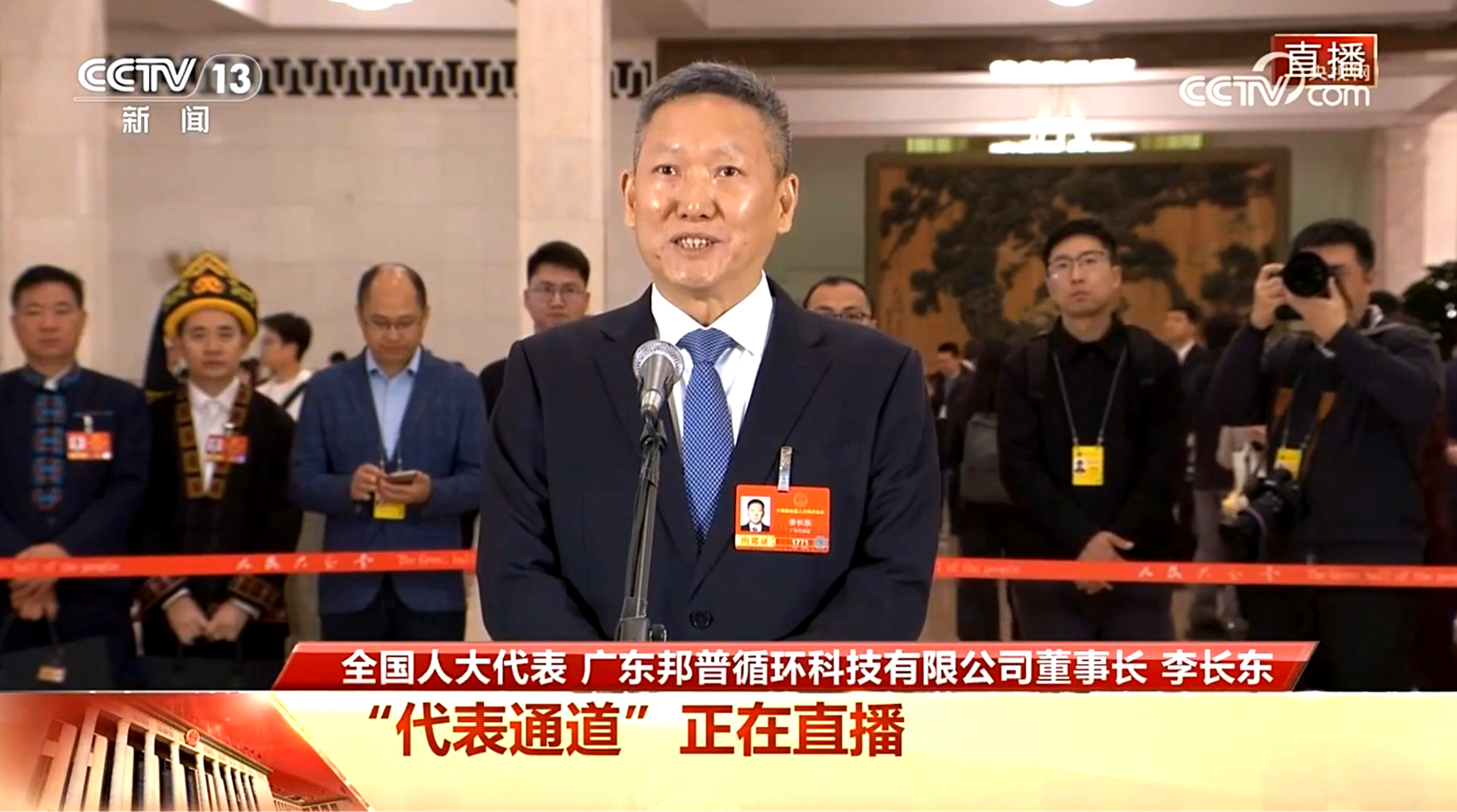
The Deputies' Passage has become one of the most watched events during the National Two Sessions. Brunp Recycling embraces this honor and responsibility. A reporter from Science and Technology Daily asked Deputy Li Changdong on the spot: "Batteries are now all around us in daily life, leaving large amounts of waste batteries in their wake. You are engaged in energy recycling and utilization. Could you share your insights on how to tackle the challenges in waste battery recycling?"
In response, Li Changdong noted that China’s inventory of new energy vehicles has exceeded 44 million. A retirement wave of power batteries is also on the horizon. Proper disposal of these waste batteries poses both a huge challenge and remarkable opportunities. Over two decades ago, waste battery recycling and utilization in China was almost non-existent. At that time, waste batteries were simply "soaked in pools" or "roasted in large iron pots", a crude practice that wasted resources and polluted the environment.
In 2005, 14 young people, driven by the vision of “returning used batteries to where they came from,” founded Brunp Recycling in Foshan, Guangdong, and threw themselves into the used battery recycling industry. At the time, they even jokingly referred to themselves as “trash collectors,” traveling from street to street to collect batteries; yet they remained full of confidence and determined to keep going.
For this group of non-professionals, technology was a major hurdle — they were starting almost from scratch. Li Changdong stated that they tried to buy foreign technology, only to find that it was obsolete. This “setback” inspired Brunp’s resolve to pursue independent R&D. In 2012, Brunp finally developed directional recycling technology, taking the lead globally in solving the industry’s “waste reduction and restoration” challenge, achieving a 99.6% recovery rate for nickel, cobalt, and manganese, with its technological level subsequently surpassing that of foreign counterparts.
Nowadays, Brunp invests over 1.5 billion yuan in R&D annually and has established two national-level innovation platforms. It has filed more than 6,000 patents, ranking first globally for five consecutive years in the number of granted patents in niche segments, and has won the Second Class Prize of the National Science and Technology Progress Award, blazing a trail of independent innovation and technology-driven growth.
In 2015, driven by the booming new energy vehicle industry, power battery recycling emerged as a prominent industry pain point.A single enterprise alone could hardly cover the entire industrial chain. Therefore, Brunp partnered with leading enterprises to build a full-lifecycle closed-loop system for power batteries, truly honoring its original aspiration of “returning waste batteries to where they originated.” At present, one in every three retired new energy vehicles across China has its waste batteries processed by Brunp, and one in every four ternary lithium batteries worldwide uses core materials supplied by Brunp.
Li Changdong concluded by noting that Xi Jinping, General Secretary of the Central Committee of the Communist Party of China(CPC), during his inspection tour in Guangdong, emphasized the need to focus on developing new quality productive forces and strengthen the deep integration of scientific and technological innovation with industrial innovation. The state has also issued the Action Plan for Improving the Recycling System of New Energy Vehicle Power Batteries. Moving forward, Brunp will take root in Guangdong, a vibrant land for entrepreneurship, and strive to refine, deepen, and sustain its battery recycling business.
For the future, Brunp will uphold scientific and technological innovation, adhere to green development, and bolster industrial security. Through its “Directional Recycling” model, it will build Chinese standards and lead the world, contributing Brunp’s strength to the high-quality development of the circular economy and the building of a powerful country!
Share


